
Brief
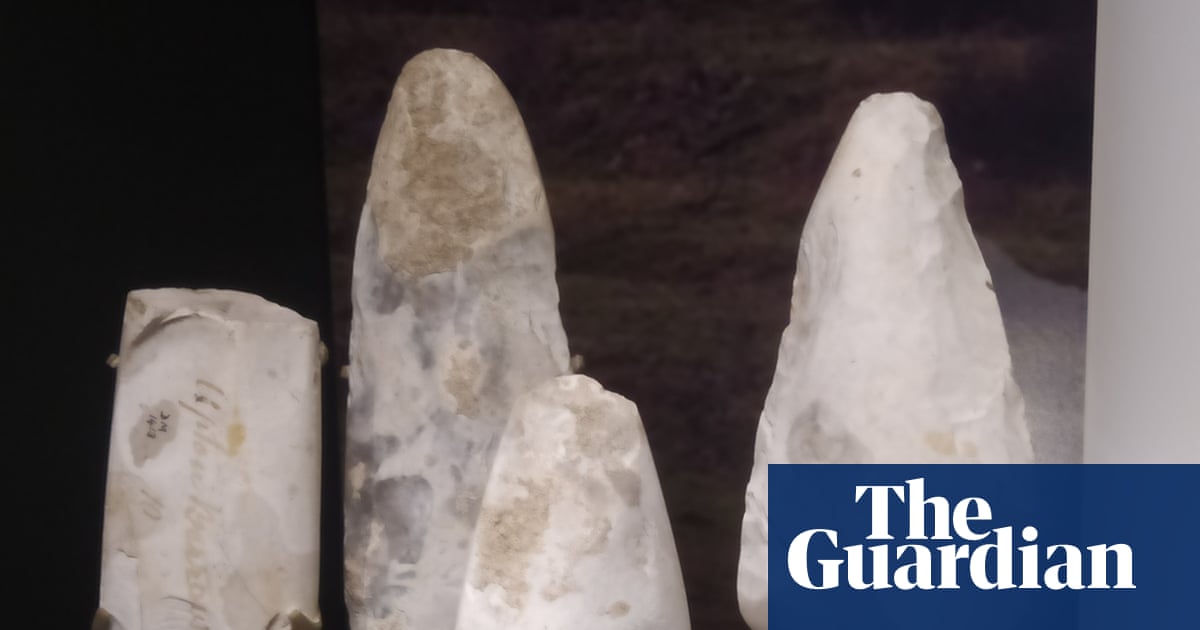
Skip to main content Skip to navigation Close dialogue 1 / 2 Next image Previous image Toggle caption Print subscriptions Search jobs Sign in Eur Europe edition UK edition US edition Australia edition International edition The Guardian - Back to home The Guardian News Opinion Sport Culture Lifestyle Show more Hide expanded menu News View all News World news World Cup 2026 UK news Climate crisis Ukraine Environment Science Global development Football Tech Business Obituaries Opinion View all Opinion The Guardian view Columnists Cartoons Opinion videos Letters Sport View all Sport World Cup 2026 Football Cricket Rugby union Tennis Cycling F1 Golf US sports Culture View all Culture Books Music TV & radio Art & design Film Games Classical Stage Lifestyle View all Lifestyle Fashion Food Recipes Love & sex Health & fitness Home & garden Women Men Family Travel Money Search input google-search Search Support us Print subscriptions Search jobs Holidays Digital Archive Guardian Licensing Live events About Us The Guardian app Video Podcasts Pictures Newsletters Today's paper Inside the Guardian Guardian Weekly Crosswords Wordiply Corrections Tips Search input google-search Search Search jobs Holidays Digital Archive Guardian Licensing Live events About Us World World Cup 2026 UK Climate crisis Ukraine Environment Science Global development Football Tech Business Obituaries Artefacts dating to about 1,800 BC that were buried in the grave with the woman – a metalworker. Photograph: Wiltshire Museum View image in fullscreen Artefacts dating to about 1,800 BC that were buried in the grave with the woman – a metalworker. Photograph: Wiltshire Museum Archaeology Ancient DNA analysis reveals Wiltshire’s Upton Lovell Shaman was a woman Exclusive: Analysis offers ‘smoking gun evidence’ that overturns previous assumption that bronze age individual was male Hannah Devlin Science Correspondent Tue 14 Jul 2026 21.01 CEST Last modified on Tue 14 Jul 2026 21.49 CEST Share Prefer the Guardian on Google The Upton Lovell Shaman, a bronze age individual who has been depicted in museum exhibits as a bearded spiritual leader and metalworker, was female, an ancient DNA analysis has revealed. The 4,000-year-old skeleton, along with the extensive collection of stone axes, metalworking tools and the remains of an elaborate ceremonial cloak found in the grave, is viewed as among the most significant bronze age burials in Britain. The artefacts date to about 1,800BC, a time when the ability of metalworkers to transform lumps of rock into molten metal would have given them a special – possibly even spiritual – position in society. Such roles, many had assumed, would have been reserved for men, but this narrative has been turned on its head by the latest analysis. “It completely tears up previous assumptions,” said David Dawson, director of the Wiltshire Museum, which holds the remains. “It’s a fantastic revelation of the position of women in society. We’re so used to the assumption of men do everything, men are the leaders, men are the metalworkers. Here we have smoking gun evidence of a female metalworker. And metalworking was the space science of its day.” The grave, first discovered in 1801 in the village of Upton Lovell, about 10 miles (16km) west of Stonehenge, contained the almost complete skeleton, with pierced animal bones arranged around the neck and the legs, suggestive of a ceremonial cloak and, possibly, a bone necklace. View image in fullscreen Artefacts in the Upton Lovell Shaman display. Photograph: Wiltshire Museum Alongside the skeleton was an array of goods linked to metalworking, including the remains of a pouch decorated with boar’s tusks, four fossil sponges hollowed out into cups, flints, metalworking scribes and a touchstone, a dark-coloured stone that could be used to assess the quality of metal. “It shows the depth of understanding of her craft,” said Dawson. “The people she left behind wanted her to take her tool kit into the afterlife.” An earlier analysis revealed gold traces on the surfaces of stones, suggesting the individual may have crafted ornaments such as clasps, which would include a “core” of bone, wood or copper, covered in a thin sheet of gold. The grave also contained what has been described as a battle axe, made from greenstone brought from Cornwall. “Whether that was for fighting or for stunning an animal before it becomes your hog roast, we can’t be sure,” said Dawson. A secondary grave, containing a skeleton in an upright seated position, was previously assumed to be the shaman’s wife, although this skeleton has been lost. The findings are unveiled in a new exhibition on ancient DNA that opens at the Francis Crick Institute in London on Thursday and looks at how genetic techniques are giving new insights into the movements of ancient people and their lives. The Upton Lovell skeleton was initially sent for DNA analysis with a view to better ascertaining the ancestry of the individual who lived at a time when Britain had an unusually valuable combination of tin and copper (which make bronze). The full details of this analysis are yet to be released, but it appears that the shaman had Beaker ancestry, which was typical in Britain at the time. The skeleton’s biological sex came as a surprise, however. “The field of ancient DNA has surged in technical capability over the last two decades, now giving us answers to questions that were previously inaccessible,” said Pontus Skoglund, senior group leader of the ancient genomics laboratory at the Crick, which performed the analysis. “It feels really good to give this to archaeologists.” The team subsequently analysed two other bones, a tooth and a toe, which gave consistent results and there was no evidence that the grave contained more than one skeleton. A detailed analysis of the bones suggested that the individual would have been tall for a bronze age woman (165cm or 5ft 4in) and robustly built. There was also evidence of arthritis in the right (but not left) wrist, suggestive of having repeatedly used the metalworking tools she was buried with for much of her life. Prof Mary Beard, the classicist and broadcaster, who is a member of the exhibition steering group, said ancient DNA promises to transform some important parts of our understanding of the past. “So often we have assigned the sex of an ancient skeleton partly on the basis of our own assumptions about sex and gender roles – if it is buried with a sword, it’s male, with a necklace, it’s female,” she said. “As with the Upton Lovell shaman, DNA analysis can help us correct those assumptions and think harder about the roles of men and women in the deep past – and perhaps also about in our own world too.” We Go Way Back opens at the Francis Crick Institute on 16 July Explore more on these topics Archaeology Museums Wiltshire Exhibitions Women Share Reuse this content Most viewed Most viewed World World Cup 2026 UK Climate crisis Ukraine Environment Science Global development Football Tech Business Obituaries News Opinion Sport Culture Lifestyle Original reporting and incisive analysis, direct from the Guardian every morning Sign up for our email About us Help Complaints & corrections Contact us Tip us off SecureDrop Privacy policy Cookie policy Tax strategy Terms & conditions All topics All writers Newsletters Digital newspaper archive Bluesky Facebook Instagram LinkedIn Threads TikTok YouTube Advertise with us Search UK jobs Tips Accessibility settings Work with us Back to top © 2026 Guardian News & Media Limited or its affiliated companies. All rights reserved. (dcr)
Comments
No comments yet.
Sign in to comment.