Brief
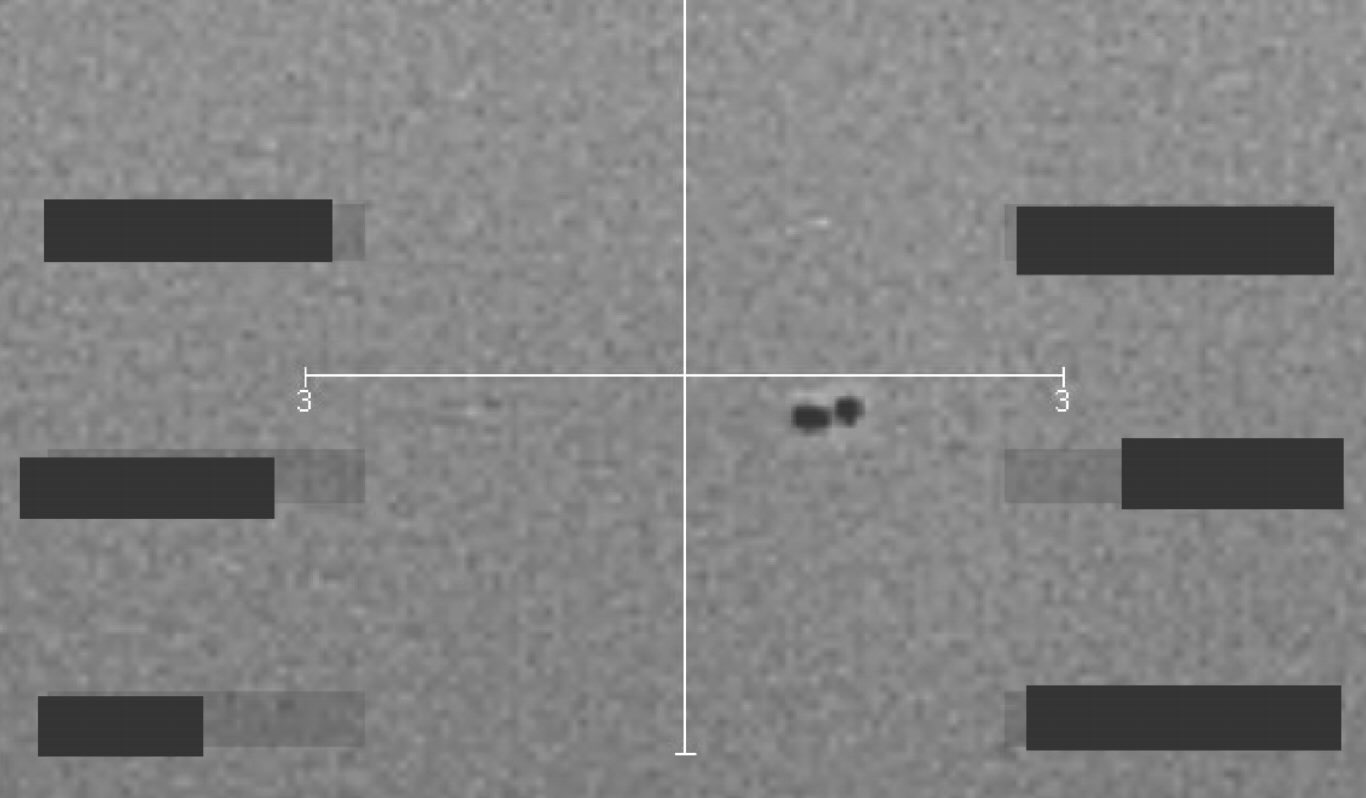
Science Defense Space Astronomy Tech Energy Physics Newsletter Submissions About AARO’s Latest UAP Report Finds No Evidence of Exotic Technology, But Mysteries Remain Micah Hanks · July 23, 2026 Welcome to this edition of The Intelligence Brief … This week, the Pentagon’s All-domain Anomaly Resolution Office (AARO) finally released its long-delayed Fiscal Year 2025 report on unidentified anomalous phenomena, revealing the latest findings from the Office’s growing number of UAP cases. In our analysis, we’ll be looking at 1) what the latest report reveals about AARO’s growing database of nearly 2,000 UAP reports, 2) why satellite flares continue to account for many recent sightings, 3) the report’s intriguing references to unresolved incidents near sensitive military installations and critical infrastructure, and 4) what AARO’s latest findings suggest about the challenges investigators still face in explaining a small but persistent number of UAP reports. Quote of the Week “AARO seeks to capitalize on a diverse set of sensor technology capabilities and intelligence analytic tradecraft… to improve the USG’s effort to investigate and respond to UAP in the air, maritime, and space domains at scale and speed.” – AARO FY 2025 ANNUAL REPORT If you enjoy the news and perspectives offered by The Debrief , make sure that you aren’t missing our stories by making us one of your “preferred sources” on Google News. You can simply follow this link to add The Debrief to your list of favorites, and you can read more about Google’s preferred sources in our article here . RECENT NEWS from The Debrie f Two ‘ancient ramps’ beside Egypt’s Red Pyramid may actually be something more significant. Astronomers just discovered a surprise beneath the surface of Jupiter’s moon Io . How does cosmic order arise despite entropy? A new gravity theory may have the answer. Get all the latest stories from The Debrief , with more breaking stories at the end of this week’s newsletter. Pentagon’s AARO Releases Long-Delayed UAP Report This week, the Pentagon’s All-domain Anomaly Resolution Office (AARO) finally released its 2025 annual report on unidentified anomalous phenomena, or UAP. You read that correctly: the long-delayed report for fiscal year (FY) 2025 has been MIA since its expected release date last October, and finally appeared at AARO’s website just three months (or so) ahead of the scheduled release date for its next annual report. Hey, better late than never. According to AARO’s latest findings, there were no cases it resolved that point to advanced foreign technology or extraordinary capabilities exhibited by UAP, but close to 200 reports from its latest batch remain unexplained due to insufficient data. AARO also reiterated two conclusions that have remained consistent across previous reports: investigators have found no evidence that the U.S. government or any private organization has recovered or exploited materials derived from UAP, and the office has received no verified reports of adverse health effects directly associated with UAP encounters. Beyond that, here’s a look at some of the report’s primary findings. Key Findings in AARO’s 2025 Report Offering an overview of the office’s investigations of cases collected between June 2, 2024, and May 30, 2025, the new report conveys that AARO received 319 new UAP cases during the reporting period, bringing its total case holdings to 1,870 since the office’s creation. 274 incidents occurred in the air domain, while 44 involved objects observed in space, and one occurred in the maritime domain. “The single maritime domain UAP case AARO received involved a report from U.S. Navy assets operating off the coast of Virginia,” AARO’s report states. “The report described approximately 100 airborne UAP and two, likely uncrewed, surface systems. AARO is actively investigating this event in coordination with the reporting unit.” The brief description of this single maritime incident AARO received is intriguing, although very little context is provided, and it is unclear whether it may be describing UAVs and uncrewed launch platforms observed at sea, which might be attributable to a U.S. foreign adversary. A Whole Lotta Satellites As for those “objects observed in space,” AARO’s report makes it clear that none of the space-domain cases originated from space-based sensors, but instead mostly came from civilian pilots reporting through the Federal Aviation Administration (FAA). The other two originated from U.S. Space Command ground-based sensors. “AARO applied all-source analysis techniques and three-dimensional modeling to render a high confidence assessment for each of these cases as being attributable to satellite flaring,” the report reads. The fact that satellite flaring has significantly contributed to recent alleged UAP sightings is nothing new. In 2022, following a series of sightings by pilots involving what were characterized as “ racetrack UAPs ,” it was determined that the sightings resulted from an optical illusion created by SpaceX Starlink satellites . While 114 of the 319 new cases AARO has received have been resolved, it says that 191 cases have been placed into AARO’s “active archive,” which involves reports that presently lack sufficient data required to make an assessment. “UAP cases held in active archive inform AARO’s locational and trend analyses and remain open to future resolution should further information or improved analytical techniques enable a more conclusive resolution,” the report states. Additionally, there were nine cases referred to members of the Intelligence Community and AARO’s science and technology partners for further technical analysis. Trends in the Data The report also identifies several trends among the incoming reports. In terms of appearance, spherical shapes remain the winning category, comprising close to 40 percent of reported UAP morphologies, with lights representing around 33 percent. Around 25 percent of sightings lacked enough information to give any clear indication of shape at all. In terms of altitude, most airborne sightings occurred between 10,000 and 35,000 feet, while reports above 45,000 feet declined significantly from the previous reporting period; notably, AARO attributes this to its progress in identifying satellite flares. Fortunately, no flight safety-related incidents were reported for the period discussed in the FY 2025 report, although there were two cases that “contained descriptions of electronic or avionic interference reported as attributable to UAP in proximity to an operational aircraft.” AARO says it remains unclear whether those effects were directly related to the observed UAP. See Also Putin Agrees Conflict Should End as U.S. Officials Work Toward Ukraine Ceasefire Agreement UAP Near Critical Infrastructure? Perhaps one of the most significant elements of the new report is that there were reportedly several new cases logged near sensitive military installations and critical infrastructure. “Some narrative reports were suggestive of phenomena whose performance characteristics exceed the known state-of-the-art within a given domain,” the report states, though adding that “No technical data accompanied these reports.” “If validated, the attendant phenomena underlying these reports may represent a currently unmitigated threat vector,” the report states. “Part of AARO’s mission is to provide data and analysis that helps mitigate potential UAP-related national security threats or operational hazards.” The report additionally documents a significant increase in reports involving unmanned aerial systems operating near U.S. nuclear infrastructure, with 50 incidents referred to AARO by the National Nuclear Security Administration and Nuclear Regulatory Commission—a 178 percent increase over the previous year’s total. It is clearly stated that none of these objects were genuine UAP or exhibited anything unusual. “The reports contained descriptions of UAS morphologies ranging from small hobbyist-sized UAS to larger multi-rotor models. Quadcopters were the most reported morphology,” AARO’s report states. As with past AARO annual reports, the FY 2025 updates leaves much to the imagination—a fact that is very in keeping with recent UAP imagery and documentation released by the Pentagon through its PURSUE initiative. Still, the report’s findings—vague as they are—do indicate one fundamental issue: objects or phenomena that remain difficult to attribute to any known sources continue to be tracked by U.S. defense personnel. With nearly 2,000 reports in its current collection, AARO concedes that while it has found no evidence of links to any extraordinary phenomena, there are also still a good number of cases that remain unresolved, and which warrant further attention. Perhaps that’s the real takeaway—not that AARO has found evidence of anything extraordinary, but that some reports do continue to defy straightforward explanation. That concludes this week’s installment of The Intelligence Brief. You can read past editions of our newsletter at our website , or if you found this installment online, don’t forget to subscribe and get future email editions from us here . Also, if you have a tip or other information you’d like to send along directly to me, you can email me at micah [@] thedebrief [dot] org, or reach me on X: @MicahHanks . Here are the top stories we’re covering right now… Look What NASA Caught Photobombing the August 2026 Solar Eclipse in This Striking New Image As This Ancient Star Cluster Unravels, a Never-Before-Seen Star Ribbon is Forming Under the Influence of Dark Matter Archaeologists Surprised to Unearth Face-Down 2500-Year-Old Statue Almost Completely Intact Scientists Develop ‘Organ-on-a-Chip’ That Could Reduce the Need for Animal Testing Secret Self-Healing Powers of the Brain Revealed in Landmark Study, Upending Past Thinking on Adult Brain’s Regenerative Abilities What Time is the Solar Eclipse on August 12? Here’s Everything You Need to Know Centuries Before the Aztec and Inca Empires Existed, Locals Built Something Incredible in the Colombian Jungle Cameras Finally Captured How a Parasitic Plant That Mimics Mushrooms Spreads Its Seeds—and an Unexpected Ally Was Revealed Hidden Charcoal Inside a Famous French Cave Just Rewrote the Timeline of Its Ice Age Paintings Mysterious Ancient Inscriptions Decoded, a Phobos Photobomb, a New Time Crystal, and New Evidence of Neolithic Technology James Webb Space Telescope Data Reveals a Previously Undiscovered ‘Gravitational Arc’ That Was Hidden in Plain Sight A Nearly 4,000-Year-Old “Giant’s Tomb” Was Accidentally Discovered in Sardinia “Magic-Angle” Graphene Uses Faint Light to Transform an Insulator Into a Metal, Revealing a New Way to Make the Unseen Visible Archaeologist Finally Decodes 2,200-Year-Old Mysterious Stonemason Inscriptions That Have Stumped Researchers for Centuries Did Sugar Help Build the Human Brain? New Research Challenges the Meat-Driven Evolution Theory Previous Article “Everywhere We Looked, We Found the Temperature Rising”: NASA Identifies a “Surprise” Heat Signature Below the Surface of Jupiter’s Moon Io Next Article U.S. Space Development Agency Orders 36 Space Vehicles for Defense Against Missile Attacks Related Posts AARO’s Latest UAP Report Finds No Evidence of Exotic Technology, But Mysteries Remain The Intelligence Brief Pentagon Releases New Batch of UAP Videos and Historical Files, But Clarity Remains Elusive Analysis Breaking News UAP “It Was the Most Incredible Thing I Ever Witnessed”: New Film Details World’s First Private Astronauts—and a Life-Altering UAP Encounter Breaking News Entertainment UAP The Pentagon Just Released Its Third Batch of UAP Files—What Have We Learned from the PURSUE Releases So Far? Analysis Opinion UAP The Intelligence Brief 2026 Solar Eclipse Spectacular: These Images Captured the Most Incredible Moments, and an Unexpected Surprise Feature Stories How Does the Jump Drive in Apple TV’s ‘Foundation’ Work? This Ancient Babylonian Tablet Contains the Oldest Image of a Ghost Ever Found Humanity’s Enduring Fascination With Mars © Copyright 2026 The Debrief. All Rights Reserved. The thoughts, views, and opinions expressed in articles on this site belong solely to the authors and do not necessarily reflect those of The Debrief, or of other groups or individuals featured on this site. ADVERTISE CONTACT ABOUT EDITORIAL GUIDELINES COPYRIGHT PRIVACY Send a News Tip The Intelligence Brief Get Our Newsletter Science Defense Space Astronomy Tech Energy Physics Newsletter Submissions About Type to search or hit ESC to close See all results
Comments
No comments yet.
Sign in to comment.