
Brief
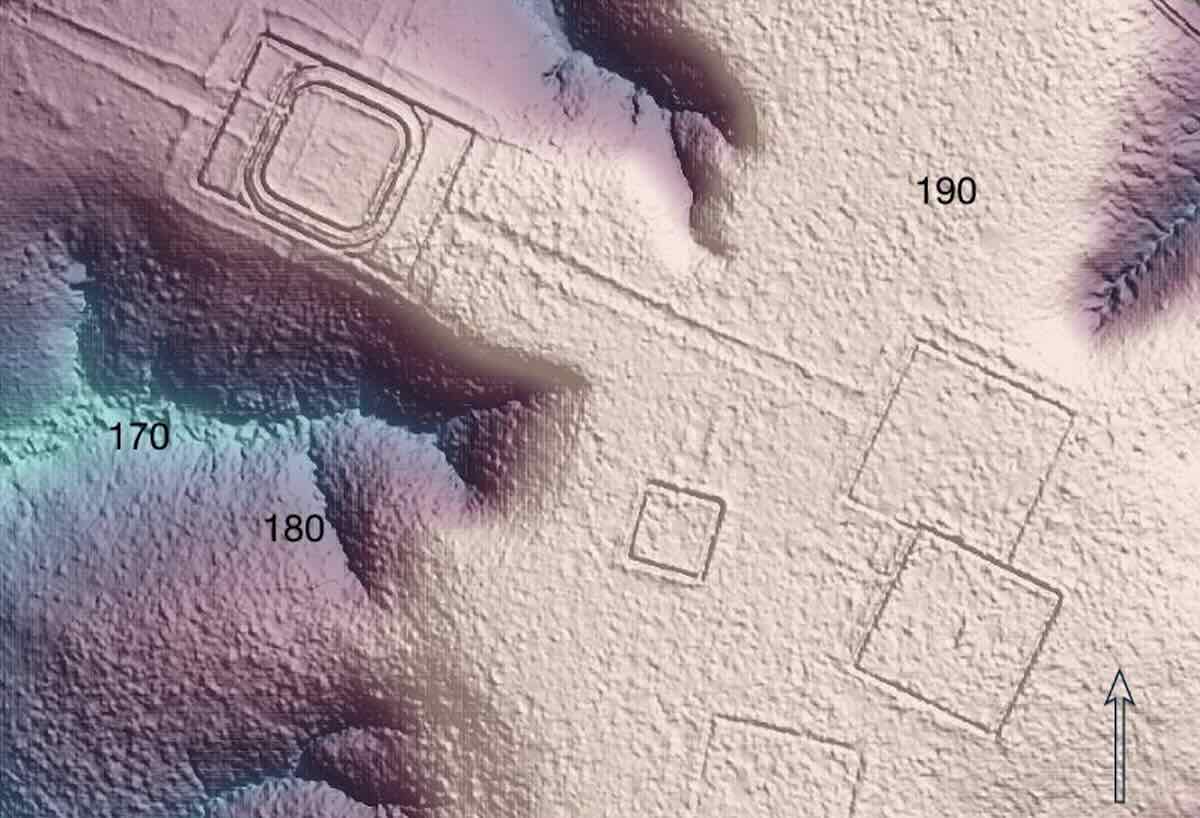
Science Defense Space Astronomy Tech Energy Physics Newsletter Submissions About (Image Source: Pärssinen, et al, Nature) New Evidence of a ‘Lost Civilization’ That Created More Than 20,000 Ancient Earthworks Has Been Found in the Amazon, LiDAR Study Reveals Tim McMillan · July 30, 2026 Beneath the seemingly unbroken canopy of the southwestern Amazon rainforest lies evidence of one of the largest monumental landscapes ever discovered in the ancient Americas. According to new research published in Nature , what archaeologists once believed were scattered ceremonial sites are instead part of an enormous precolonial civilization that may have changed vast stretches of the Amazon nearly 2,000 years ago. Using airborne LiDAR capable of penetrating forest cover, an international team of researchers says they have identified hundreds of previously unknown earthworks , estimating that more than 20,000, and perhaps as many as 30,000, remain spread across southwestern Amazonia. The findings dramatically expand the known scale of the so-called Aquiry civilization and suggest that millions may have inhabited the region during its peak nearly 2,000 years ago, forcing a reconsideration of how densely populated and intensively managed the ancient Amazon may have been. “We also propose that the total human population of the area in 100–300 AD was 1.25–3 million people,” researchers write. “If similar results are found elsewhere in Amazonia, the total precolonial population density and its effect on the current Amazonian soil and forest structure, biodiversity, and even some modeling of the global climate should be re-evaluated.” The study represents one of the most ambitious archaeological surveys ever conducted in the Amazon. Researchers flew more than 2,700 miles across the forests of Brazil’s Acre and Amazonas states using airborne LiDAR , a laser-mapping technology able to see through gaps in the dense treetops to produce detailed maps of the landscape below. Those maps revealed hundreds of geometric earthworks that had remained hidden for centuries. The newly discovered structures include squares, circles, rectangles, and multilateral enclosures connected by roads and clustered into monumental complexes. Some feature ditches up to 43 feet wide and more than 16 feet deep, with towering earthen embankments rising alongside them. Although a handful of these earthworks had previously been identified in deforested areas using satellite imagery, LiDAR revealed that those earlier surveys had dramatically underestimated just how many remained obscured beneath the forest. Airborne LiDAR imagery reveals several of the geometric earthworks hidden beneath the Amazon rainforest canopy. The newly identified ceremonial complexes—featuring squares, circles, and interconnected enclosures—are part of a vast precolonial landscape that researchers estimate may contain more than 20,000 monumental sites. (Image Source: Pärssinen, et al, Nature) One of the study’s most striking findings was that LiDAR scanning uncovered roughly five times more earthwork s than satellite imagery had detected across the same landscapes. In one survey block, researchers had previously identified only 30 structures using conventional imagery. Meanwhile, LiDAR revealed 156. Assuming similar results across the wider region suggests that between roughly 24,000 and 30,000 earthworks may exist within the estimated boundaries of the Aquiry civilization. Those numbers alone would rank the region among the most monument-rich archaeological landscapes in the world. For decades, archaeologists have debated whether much of Amazonia could have maintained large, complex societies before European contact. Prevailing interpretations portrayed much of the rainforest as environmentally limiting, capable of sustaining only relatively small and dispersed populations. However, more recent discoveries, including ancient cities in Bolivia and Ecuador, have steadily challenged that assumption. Now, these latest findings suggest the region may have supported an even larger and more sophisticated society than researchers once imagined. Rather than representing isolated ceremonial sites scattered through an otherwise untouched forest, the researchers argue the earthworks belonged to a civilization extending about 71,000 square miles, representing about three times larger than previous estimates of the Aquiry cultural area. Many of the geometric enclosures appear not to have been permanent settlements themselves. Instead, researchers believe they served as ceremonial, political, and public gathering places where dispersed communities periodically assembled. Similar patterns of temporary gathering centers are known from the Inca Empire, where populations converged for rituals, governance, and communal events despite living across broad landscapes. Constructing these massive earthworks would have demanded sophisticated planning, organized labor, mathematical knowledge, and long-term social coordination. According to the study, some of these ceremonial centers remained in use for nearly 1,500 years, indicating remarkable cultural continuity across generations. Estimating how many people actually lived within this landscape presented a separate challenge. Rather than simply multiplying earthworks by a fixed population estimate, the researchers combined several independent lines of evidence. They examined radiocarbon dates to determine how many sites were occupied simultaneously, compared the earthworks with later mound villages built in the same region, incorporated ethnographic information from Indigenous communities, and evaluated the labor required to construct and maintain the monumental enclosures. Their study indicates the civilization reached its greatest extent between approximately A.D. 100 and 300. During that period, somewhere between one-quarter and roughly 60 percent of the known ceremonial centers may have been active simultaneously. Assuming each ceremonial center served communities of roughly 300 people, the researchers estimate the region’s population reached between about 1.25 and 3 million people during its peak. After accounting for earthworks that LiDAR may have missed beneath dense forest, they conclude the total could have been as high as 3.8 million. See Also Archaeologists Unearth 2000-Year-Old Evidence of Psychedelic Use by This Enigmatic Ancient Culture Those estimates substantially exceed many previous reconstructions of southwestern Amazonia and imply population densities rivaling or exceeding some later historical agricultural societies. Equally significant is what these discoveries reveal about how ancient Amazonians altered their environment. The study points to fertile soils rich in nutrients, evidence of extensive cultivation of maize, squash, manioc, beans, peanuts, sweet potatoes, and chili peppers, as well as widespread management of Brazil nut groves and numerous economically important palm species. Rather than exhausting the rainforest, researchers contend these communities actively managed forests, soils, and waterways throughout centuries, creating ecological legacies that remain visible today in the composition and biodiversity of Amazonian forests. Present-day ecological studies have increasingly shown that many Amazonian forests long regarded as pristine wilderness actually bear the imprint of thousands of years of Indigenous landscape management. If similar densities of monumental earthworks are identified elsewhere across Amazonia, researchers argue that assumptions about precolonial population sizes, biodiversity patterns, soil formation, and even climate models may need substantial revision. The work additionally underscores the key role of LiDAR in modern archaeology. Over the past decade, the technology has revealed hidden Maya cities beneath Central American jungles , extensive urban complexes in the Bolivian Amazon, and extensive settlements in Ecuador’s Upano Valley. Nevertheless, researchers caution that important questions remain unanswered. The southeastern limits of the Aquiry civilization are still poorly understood because large portions of Rondônia have yet to receive comparable archaeological investigation. Dense vegetation also continues to obscure portions of the landscape, meaning many earthworks almost certainly remain undiscovered even after LiDAR surveys. “These ancient achievements constitute an important legacy that is still observable in the soil, and the composition and biodiversity of the contemporary tropical forest,” researchers write. “This legacy should be fully considered in future studies of Amazonia, including climate modeling and sustainable land-use planning.” The recent study, “ Over 20,000 precolonial earthworks in the Southwest Amazonia ,” by Martti Pärssinen et al., appeared in Nature . Tim McMillan is a retired law enforcement executive, investigative reporter and co-founder of The Debrief. His writing typically focuses on defense, national security, the Intelligence Community and topics related to psychology. You can follow Tim on Twitter: @LtTimMcMillan. Tim can be reached by email: tim@thedebrief.org or through encrypted email: LtTimMcMillan@protonmail.com Previous Article The World War II Atomic Blast Over Hiroshima Created a Previously Unidentified Multicomponent Metallic Alloy Next Article China Develops Drones with Endless Flight Times Powered by Advanced Laser Technology Related Posts Scientists Used Lasers and Citizen Scientists to Find a “Lost World” of Giant Trees Breaking News Environment Science New Evidence of a ‘Lost Civilization’ That Created More Than 20,000 Ancient Earthworks Has Been Found in the Amazon, LiDAR Study Reveals Archaeology Breaking News Scientists May Have Finally Solved One of Human Evolution’s Biggest Mysteries: When Our Ancestors Grew Larger Archaeology Breaking News Science An Ancient Maya City Was Lost for Centuries—This Student Accidentally Rediscovered it Hidden in Google Data Archaeology © Copyright 2026 The Debrief. All Rights Reserved. The thoughts, views, and opinions expressed in articles on this site belong solely to the authors and do not necessarily reflect those of The Debrief, or of other groups or individuals featured on this site. ADVERTISE CONTACT ABOUT EDITORIAL GUIDELINES COPYRIGHT PRIVACY Send a News Tip The Intelligence Brief Get Our Newsletter Science Defense Space Astronomy Tech Energy Physics Newsletter Submissions About Type to search or hit ESC to close See all results
Comments
No comments yet.
Sign in to comment.