Brief
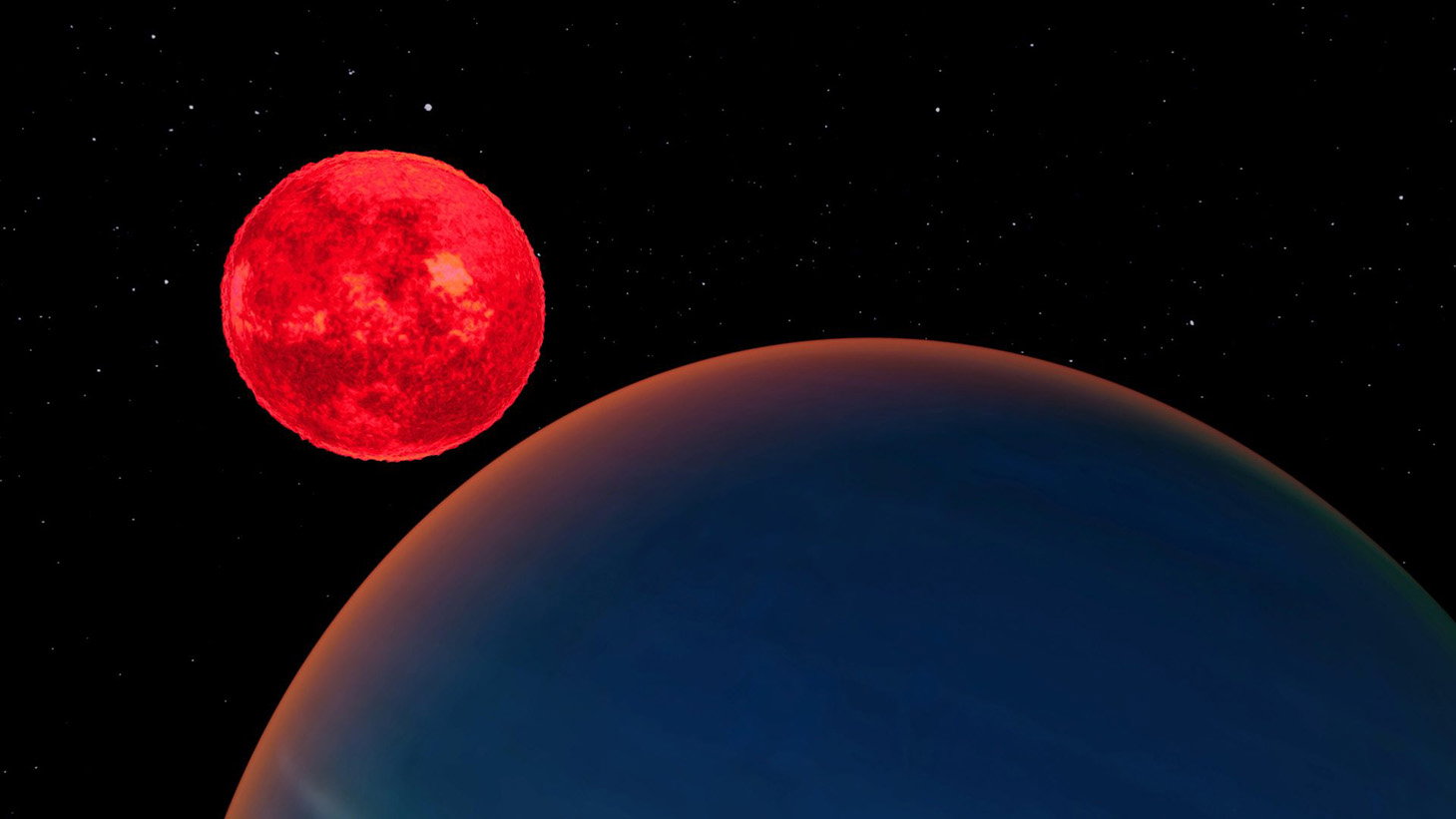
Science Defense Space Astronomy Tech Energy Physics Newsletter Submissions About With its close proximity and its host star’s low mass, GJ 436 b exhibits considerable influence in the inverse of the normal planet-star relationship (Image Credit: IAA-CSIC/LampScience) This Intriguing Exoplanet is Just 25 Light-Years from Earth—Is Its Too Dangerous to Be Home to Life? Ryan Whalen · July 2, 2026 Researchers have discovered a potentially habitable exoplanet just 25 light-years from Earth—but is its precarious location on the cosmic shore too dangerous to make it a home for extraterrestrial life? In a recent paper in The Astrophysical Journal , researchers at the University of California, Irvine, revealed their discovery of GJ 3378b, an exoplanet that resides in the habitable zone , sometimes referred to as the “Goldilocks zone,” a distance from the host star ideal for liquid surface water. The habitable zone is a key focus in the search for extraterrestrial life , as planets any closer would have their atmospheres and surface waters burned off, while those any further from their host star would be completely frozen. Finding Another Earth “This one’s exciting,” said lead author Paul Robertson , a UC Irvine assistant professor of astronomy and lead author of the new study. “It’s one of our closest cosmic neighbors. 25 light-years sounds like a long way, but the Milky Way is about 100,000 light-years across, so in that respect it’s our next-door neighbor.” Robertson led the team in the exoplanet discovery, using the Habitable-zone Planet Finder on the Hobby-Eberly Telescope at McDonald Observatory in Texas, and the NEID Spectrometer on the WIYN Telescope at Kitt Peak National Observatory in Arizona. GJ 3378b is about twice the size of Earth, making it what astronomers call a “super-Earth” for its increased size. Additionally, this potentially habitable exoplanet likely receives a comparable amount of stellar radiation to our planet. “This super-Earth gets about 90 percent of the radiation from its host star as Earth gets from its sun, so it’s right in the sweet spot,” said Robertson. Exoplanet Atmosphere While GJ 3378b resides within its star’s habitable zone, it does so only barely. This fringe area astronomers refer to as “the cosmic shoreline,” a distance just outside of which the stellar radiation would become so intense that its atmosphere would be ripped away, and any potential surface water along with it. Straddling this shoreline, researchers are uncertain whether GJ 3378b has an atmosphere or is still a victim of excessive stellar radiation, as its larger size relative to Earth may make it more susceptible. Our own solar system also offers an excellent example of this: the planet Mars, which researchers suspect once had an Earth-like atmosphere, and potentially even life. However, intense solar radiation bombardment destroyed that atmosphere, taking the surface water with it, leaving a desolate wasteland. “If you scale the Earth down to the size of an apple, its atmosphere would be about as thick as the skin of the apple,” said Robertson. “That’s just enough to maintain the kinds of surface pressures where you can have liquid water. It’s enough that there’ll be breathable air, and it provides maybe a little bit of protection from the harsh radiation environment of space.” Extraterrestrial Life on Exoplanets Although GJ 3377b is relatively close to Earth on a cosmic scale, current equipment cannot determine whether the planet harbors an atmosphere. To do so, advanced future observation platforms will be required, and just such work is on the horizon. See Also Forget 5G, This Electromagnetic Vortex Cannon May be the Future of Telecommunications “If a planet in the habitable zone has a proper atmosphere, we can justify further research looking for biosignatures, liquid water, or other signs of life that require both an atmosphere and the right amount of heating from the host star,” said co-author Gogod James, a UC Irvine student in Robertson’s group who worked to characterize the size of GJ 3378b. NASA plans to take a closer look at these potentially habitable worlds in about two decades with its upcoming Habitable Worlds Observatory (HWO). Launching in the 2020s, HWO will be a large infrared/optical/ultraviolet space telescope designed to confirm whether exoplanets have atmospheres, and then seek biosignatures within those atmospheres, which could indicate the presence of extraterrestrial life. The paper, “ A Revised Mass and Period for the Habitable Zone Super-Earth GJ 3378 b: A Planet Straddling the Cosmic Shoreline ,” appeared in The Astrophysical Journal on June 30, 2026. Ryan Whalen covers science and technology for The Debrief. He holds an MA in History and a Master of Library and Information Science with a certificate in Data Science. He can be contacted at ryan@thedebrief.org, and follow him on Twitter @mdntwvlf. Previous Article Australia Joins Brain-Computer Interface Race With Less-Invasive Brain Tech Next Article America at 250: From the Battle for Independence, to the Fight Over Artificial Intelligence Related Posts “A Major Milestone in the Search for Life on Other Planets”: First Ever Detection of an Atmosphere Around an Earth-Like, Habitable Zone Rocky Exoplanet Astronomy Breaking News Science Space This Intriguing Exoplanet is Just 25 Light-Years from Earth—Is Its Too Dangerous to Be Home to Life? Astronomy Breaking News “It’s Like Using a Time Machine” Unexpected Cosmic ‘Life After Death’ Discovered on Planets Around a Burned-Out Star Astronomy Breaking News This Strange Exoplanet Has Revealed “the Clearest Evidence To Date” of Something Many Astronomers Suspected Astronomy Breaking News © Copyright 2026 The Debrief. All Rights Reserved. The thoughts, views, and opinions expressed in articles on this site belong solely to the authors and do not necessarily reflect those of The Debrief, or of other groups or individuals featured on this site. ADVERTISE CONTACT ABOUT EDITORIAL GUIDELINES COPYRIGHT PRIVACY Send a News Tip The Intelligence Brief Get Our Newsletter Science Defense Space Astronomy Tech Energy Physics Newsletter Submissions About Type to search or hit ESC to close See all results
Comments
No comments yet.
Sign in to comment.