Brief
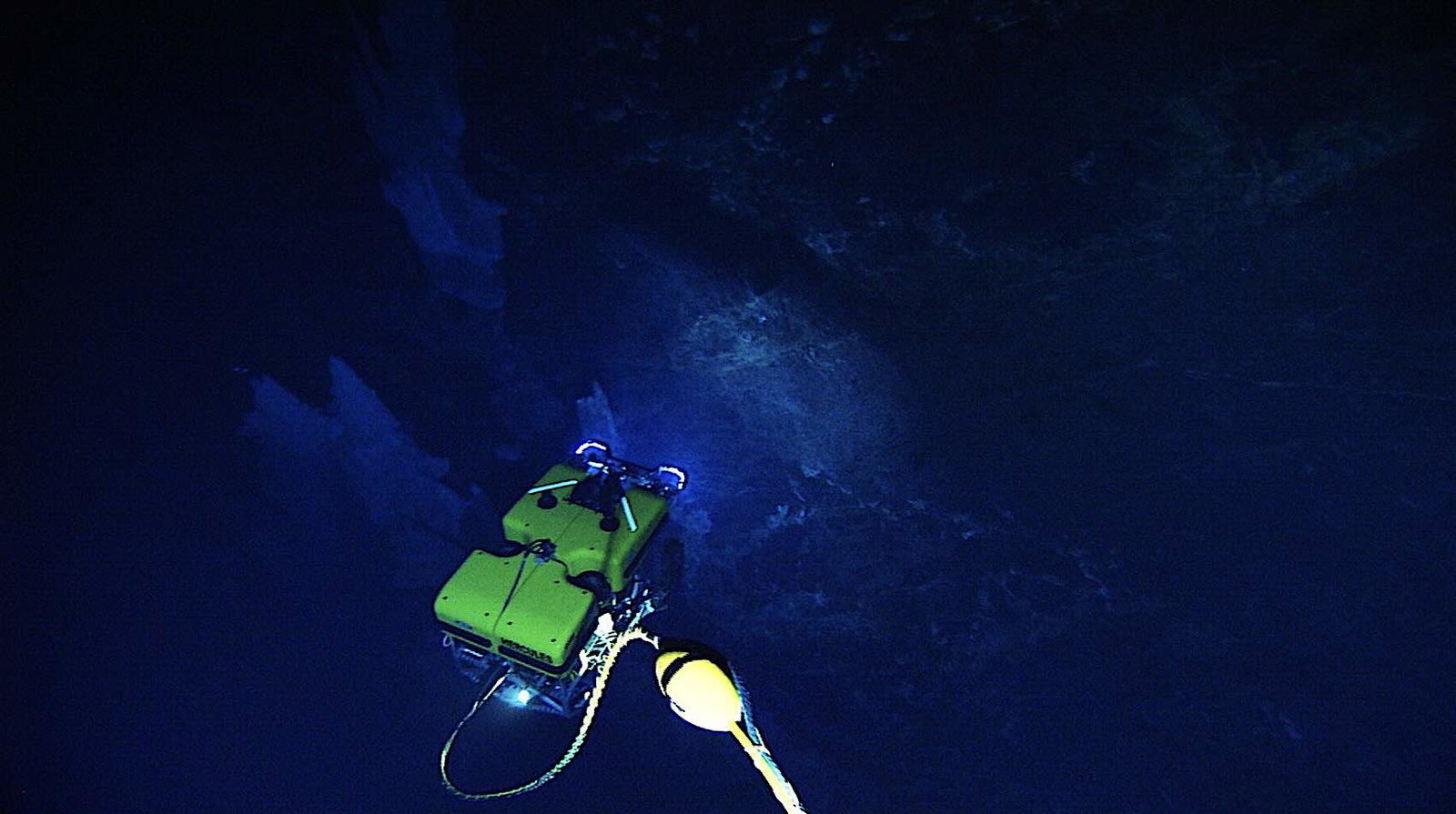
Science Defense Space Astronomy Tech Energy Physics Newsletter Submissions About The ROV Hercules is shown approaching the Lost City (Image Credit: IFE, URI-IAO, UW, Lost City Science Party; NOAA/OAR/OER; The Lost City 2005 Expedition) Deep Beneath the Atlantic, an Eerie “Lost City” is Feeding Legions of Lifeforms That Thrive Where Sunlight Never Reaches Ryan Whalen · July 17, 2026 For centuries, ancient seafarers have told tales of fabled lost lands. They have been known by many names—Ultima Thule, Hy-Brasil, the Fortunate Isles, and of course, the legendary lost city of Atlantis. Now, scientists say Earth’s hidden plumbing system may be feeding one of its strangest ecosystems —an area on the Atlantic seafloor that conjures images of such legendary landscapes lost to time and memory. Known as the Lost City hydrothermal field, this ancient Atlantic oddity is doing more than just broadening our view on how extremophiles thrive in some of our planet’s least hospitable environments: it offers a potential model for how extraterrestrial life may thrive elsewhere in our solar system. In a recent paper published in Geophysics, Geochemistry, and Geosystems , an international team of researchers finally discovered the system behind these hydrogen- and methane-rich alkaline hot springs that feed the Lost City ecosystem . The white carbonate chimneys that emit these gases provide an alternative to sunlight as the Lost City’s primary energy source, allowing life to thrive in a challenging deep ocean environment. A view of the Lost City hydrothermal vent, located adjacent to the Mid-Atlantic Ridge (Image Credit: Susan Lang, University of South Carolina/National Science Foundation/ROV Jason 2018 WHOI) Searching Near The Lost City Those precious nutrients coming from these vents were created by underground reactions. It turns out that the water feeding the Lost City is likely part of a larger underground system, where extreme processes imbue the liquid with essential nutrients. The discovery came from nearly a mile below the Atlantis Massif, a large block of Earth’s crust that forms an underwater mountain range. This dome-shaped region stretches for 10 miles and rises 14,000 feet above the ocean floor. Above, a map shows the location of the Lost City on the Atlantis Massif (Image Credit: NOAA) Geologists believe this formation originated between 1.5 and 2 million years ago, as tectonic plate movement pulled it out from beneath the Mid-Atlantic Ridge, forming a new feature on the ocean floor. From aboard the Joint Oceanographic Institutions for Deep Earth Sampling (JOIDES) ship Resolution, scientists drilled their 4,160-foot-deep hole about 2,600 feet north of the Lost City. They were intrigued to find that the water recovered from the hole had a chemical composition extremely similar to that of water emerging from the Lost City vents. Beneath The Ocean Floor From their drill site, they pumped water from varying depths up to the surface for examination. Roughly the first 1,500 feet consisted primarily of seawater and freshwater from the drilling process, yet at lower depths, they found water that had risen from beneath the rock. At the deepest depths, up to 80% of the sample came from these subterranean regions. Their detailed analyses revealed that the water had reacted with the surrounding minerals to gain calcium while losing magnesium, a reaction that would require prolonged exposure to rocks at a temperature of at least 572°F. Despite this finding, the hole was much cooler when the team took their samples. Typically, a water-rock reaction with gabbroic and ultramafic rock would produce such results that are high in calcium, yet with no magnesium. Other components, such as lithium, rubidium, cesium, and strontium, were found in the water at both the bore site and Lost City. One of the Lost City’s many carbonate spires is shown in this image from the 2005 Lost City Expedition (Image Credit: IFE, URI-IAO, UW, Lost City Science Party; NOAA/OAR/OER; The Lost City 2005 Expedition) The findings are consequential for providing the first direct evidence of this extremely hot water circulating beneath the Atlantis Massif through gabbroic and ultramafic rock. In this hidden plumbing system, seawater reaches deep within oceanic plates, providing energy to these deep-sea environments and potentially supporting their microbial life. Feeding The Lost City As researchers have now demonstrated that hydrogen-enriched water can naturally form deep within the Earth through rock reactions, researchers say there are major implications for our understanding of the Earth and beyond. See Also Dark Energy’s Early Universe Behavior Was More Exotic Than Expected, New DESI Data Suggest For one, it adds a new element to Earth’s energy cycles, explaining how life persists under such difficult, dark conditions. Secondly, it offers intriguing new ideas about how life might persist in extraterrestrial environments, as humans continue to search for it elsewhere in the cosmos. The strange conditions of the Lost City ecosystem are thought to be a potential model for how life could persist in the global oceans of ice-covered worlds such as Jupiter’s moon Europa or Saturn’s moon Enceladus. However, some uncertainty about the samples does remain. Seawater, freshwater, and drilling contaminants were present in the samples, and the exact proportions attributable to gabbro or ultramafic rock are unknown. Also, while this is evidence for an underground connection between the borehole and the Lost City chimneys, it is not conclusive proof that they are connected. Plans are already underway to return once the borehole has stabilized to collect pristine samples that will allow researchers to answer questions about where and how these reactions occur, as well as the amount of energy they add to the water. From the most inhospitable regions on Earth to the quest for organisms among the stars, the research underway deep within our oceans is providing new answers to how such life persists. The recent paper, “ Borehole Waters From Hole U1601C (Atlantis Massif) Provide Constraints for a Deep-Sourced Formation Water That (Could) Feed the Lost City Hydrothermal Field ,” appeared in Geophysics, Geochemistry, and Geosystems on July 12, 2026. Micah Hanks, Editor in Chief of The Debrief, also contributed to this reporting. Ryan Whalen covers science and technology for The Debrief. He holds an MA in History and a Master of Library and Information Science with a certificate in Data Science. He can be contacted at ryan@thedebrief.org, and follow him on Twitter @mdntwvlf. Previous Article Can You See It? This Stealth Drone Deploys a Human Perception “Hack” to Become Nearly Invisible to the Eye Next Article Astronomers Uncovered a Hidden Bubble Inside the Orion Nebula Related Posts Deep Beneath the Atlantic, an Eerie “Lost City” is Feeding Legions of Lifeforms That Thrive Where Sunlight Never Reaches Breaking News Environment Science Thousands of Alien Plant Species Could Soon Take Root in the Arctic Biology Science New Research Has Revealed a Big Surprise About Baby Dinosaurs, Upending Past Thinking About These Ancient Reptiles Paleontology Science From Sunken ‘Ghost Fleets’ to Baltic Bombs, Remnants of Human Conflict Are Playing a Surprising Role in Forming New Ocean Habitats Breaking News Environment Science © Copyright 2026 The Debrief. All Rights Reserved. The thoughts, views, and opinions expressed in articles on this site belong solely to the authors and do not necessarily reflect those of The Debrief, or of other groups or individuals featured on this site. ADVERTISE CONTACT ABOUT EDITORIAL GUIDELINES COPYRIGHT PRIVACY Send a News Tip The Intelligence Brief Get Our Newsletter Science Defense Space Astronomy Tech Energy Physics Newsletter Submissions About Type to search or hit ESC to close See all results
Comments
No comments yet.
Sign in to comment.